Break into AI. Become a machine learning engineer.
Master the ML fundamentals BigTech actually hires for — with an AI tutor that grills you until concepts click. Built by engineers from Google.
Free to start · No credit card required
From your first lesson to your first ML offer
Prof builds the bridge.
Assembling a burger at McDonald's doesn't make you a chef. Calling a model doesn't make you an AI engineer.
The Big Mac assembler knows the recipe: lettuce, patty, sauce, bun. Identical every time. The moment the order changes — diabetic, halal, gluten-free — the recipe breaks.
Sound familiar? Calling a model and shipping whatever it returns is not AI engineering.
A real chef can walk into any kitchen. Take butter chicken: it's tomato to onion at 3:1, cashew for body, yogurt-marinated chicken thigh in a clay oven for the char.
That's why the same chef can drop the sugar for a diabetic uncle, swap chicken for paneer for a vegetarian grandma, and dial up the butter for kids who want it “like the restaurant.”
Nothing breaks — because the chef understands the substrate. That's what Prof teaches.
Generation is cheap. Judgment is what you are paid for.
The model can do this
You still have to do this
Write the code
Decide what to build — and own it in production
Produce an architecture diagram
Design the distributed system: reliability, latency budgets, and the team who maintains it for years
Optimize a function
Predict the blast radius — how the change propagates across the stack
Answer "how"
Answer "whether" — and own the call when it’s wrong at 3am
The “just-ask-the-LLM” person is not wrong that the model can generate the code. They are wrong that generating the code was ever the hard part.
See math move.
Drag the variables. Feel why the formula is the formula.

Built the way Karpathy, Sutskever, Hassabis, Dean taught themselves.
No one PhD'd them into greatness. They built from scratch, read the foundational papers, mastered the substrate. Prof's curriculum is the same path.
Code is the source of truth.
— Andrej Karpathy
Karpathy built micrograd — a working autograd engine — in pure Python before reaching for PyTorch. His "Zero to Hero" course is a manifesto: 10,000 hours of deliberate practice, building from scratch, until the math becomes intuition.
Prof's CNN, RNN, and Transformer courses follow the same arc.
Read the 40 papers that contain 90%.
— Ilya Sutskever
Sutskever told John Carmack: read these 30–40 papers and you'll know 90% of what matters. The list isn't a fad — it's the foundation. Transformers, attention, scaling laws, representation learning.
Prof's Interview-Readiness sections are organized exactly around these primary sources.
Solve intelligence, then use it.
— Demis Hassabis
Hassabis coined "jagged intelligence" to explain why an AI tool can win a math olympiad and fail at high-school algebra. The defense is fundamentals — the ability to pressure-test what your tool just told you.
Prof's quizzes, interview-readiness sets, and code labs all train this judgment.
The "very bottom" still matters.
— Jeff Dean
Dean designed MapReduce, TensorFlow, and the TPU. He's the proof that staff-level engineers master multiple layers of the stack — not just the framework du jour. Google's interview process, despite the AI tools, is still focused on data structures and algorithms.
Prof's curriculum mirrors that staircase.
Fundamentals first. Tools second.
One track. From regression to a multi-agent system — and the interview that turns the work into an offer.
AI Engineering Track
Foundations
Regression · Math · Probability · Statistics · Linear Algebra
Core ML
Deep Neural Networks · Optimization & Training
Deep Learning
CNNs · Computer Vision · RNNs · Sequence Models
Intelligence Layer
Transformers · Build Your Own GPT
Applied AI
LLM Applications · RAG Systems · Agents & Multi-Agent Systems
Mastery
AI Research · Production Systems
Interview Readiness
MLE Interview Prep · L3 · L4 · L5 Rubrics · System Design for ML


Industry-standard
10+ tools
you'll ship with
Learners work with industry-standard tools across deep learning, LLMs, and production-grade ML systems used in top tech companies.
We are not a passive video platform.
An AI tutor that triggers Analytical Thinking
The tutor doesn't tell you the answer. It nudges, asks back, and forces the cognitive effort that turns information into retention.
Gamified visual animations from first principles
Interactive visualizations of gradient descent, attention heads, Neural Network Training, causal masking. You see the mechanism move — not just a static slide.
Recent interview questions from BigTech and elite startups
Per-course Interview-Readiness sets, refreshed quarterly, drawn from actual loops at Google, Meta, OpenAI, Microsoft, Anthropic, Databricks, and others.
Quizzes on every lesson
Formative assessment so you know whether you understood it — not just whether you watched it.
Three formats, your choice
Video for the watchers. Text for the fast readers. Code labs for the builders. Same lesson, three ways through.
Built around fundamentals, not frameworks
When PyTorch becomes Jax becomes the next thing, your investment doesn't depreciate. The fundamentals do.
They came for the courses. They stayed for the rigor.
B2B Partner Spotlight
Directors, deans & faculty who brought Prof to their campus

Dr. Anurag Kumar
Dean, Jigyasa University, Dehradun
Dean at Jigyasa University with 15+ years — PhD in Video Analytics from IIITM driving AI and Machine Learning education.


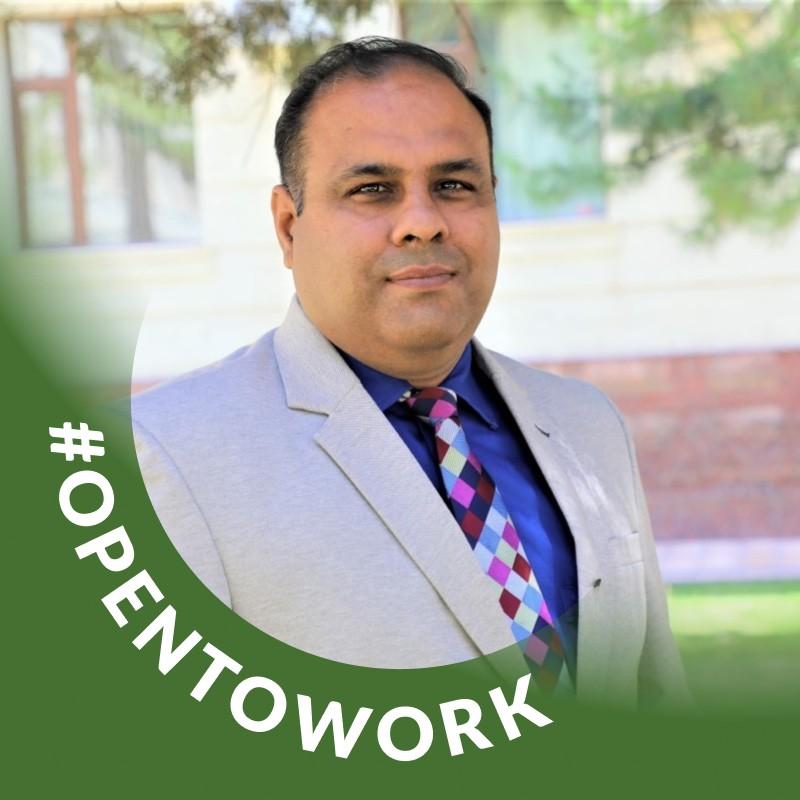







Dr. Anurag Kumar
Dean, Jigyasa University, Dehradun
Dean at Jigyasa University with 15+ years — PhD in Video Analytics from IIITM driving AI and Machine Learning education.
From Independent Engineers, Tech Leads & Managers
People who learned here and now build at top companies











Professors' Voice
 from feedback
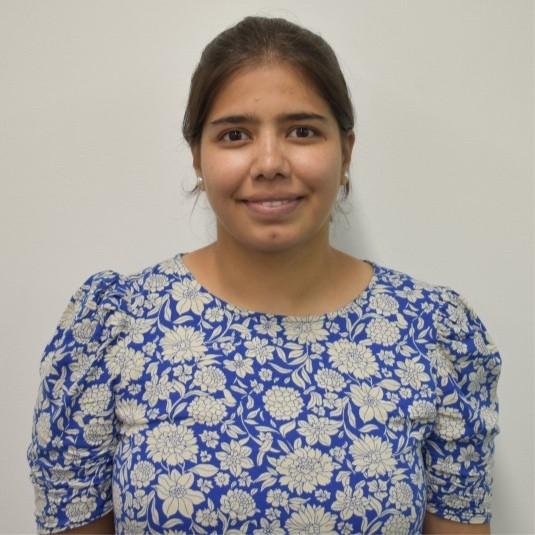
Poonam Yadav
Faculty at IILM University




 from feedback
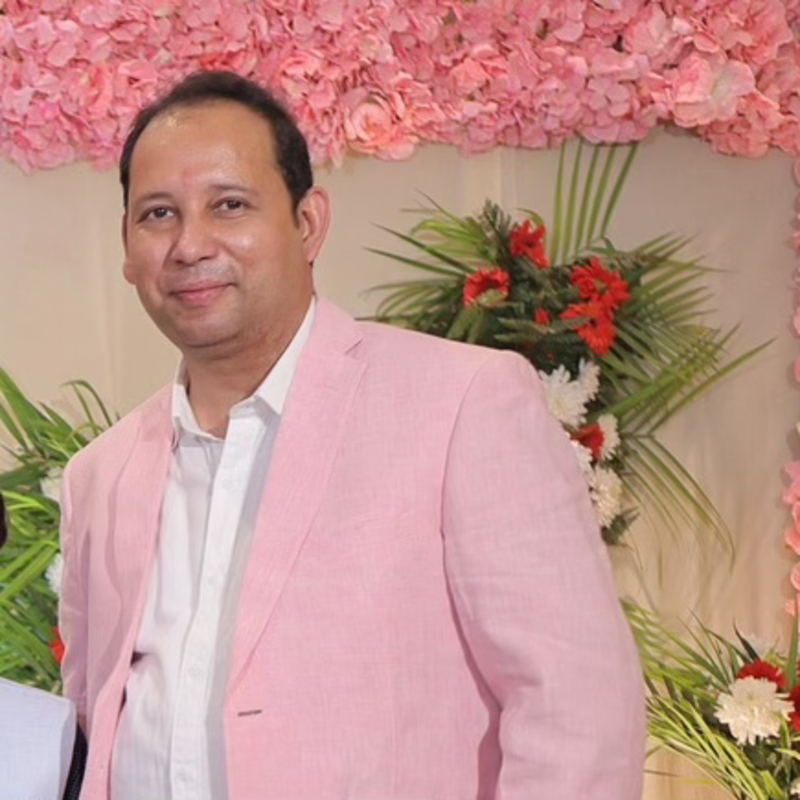
Devesh Pratap Tiwari
Assistant Professor
from feedback
Dr. Shree Harsh Attri
Associate Professor



 from feedback
Poonam Yadav
Faculty at IILM University
from feedbackDevesh Pratap Tiwari
Assistant Professor
from feedbackDr. Shree Harsh Attri
Associate Professor
2012 · The big bang
In 2012, Alex Krizhevsky trained a CNN on two $500 NVIDIA gaming GPUs split across his desk. He won ImageNet by a margin nobody expected, and the world realized that NVIDIA's six-year, Wall-Street-hated bet on CUDA was actually the secret to modern AI. The lesson: fundamentals about what hardware can do, married to the courage to ignore consensus, makes empires. That's the engineer Prof builds.
Four lines from the Memorandum.
“Generation is cheap. Judgment is what you are paid for.”
Chapter I
“Tools have a half-life of eighteen months. Fundamentals, of decades.”
Chapter III
“The argument is not against the tools. The tools are extraordinary. The argument is against the idea that using the tools is the same as understanding the systems.”
Chapter VII
“Professor stands for rigor in a market flooded with fluff.”
Chapter VI
Vol. I, No. 01 · Privately circulated
Five tracks. Seventeen employers. One curriculum.
The 2026 AI hiring market is bifurcated: an oversupply of API-callers at the L4 floor, and a genuine scarcity of judgment-capable engineers at the L6 Staff bar. The bridge between $400K and $775K total comp is built almost entirely from the fundamentals AI tools cannot generate. Prof exists to put you on the scarcity side of that gap.
Level
Role type
What you actually do
Median total comp
Independent on complex tasks; owns a medium project
Leads major projects; tech lead for a team
Cross-team influence; ambiguous problems; domain expert
Division-wide strategy; multi-year roadmaps
“The L5 → L6 jump from Senior to Staff is +$200K of total compensation. The skills that close it cannot be generated by AI — that's exactly why we teach them.”
The five tracks of 2026
Machine Learning Engineer
Meta · Amazon · Apple · Stripe · Netflix
80% systems / 20% modeling
Applied / Research Scientist
Meta AS · Amazon AS · Google RS · Apple AS
80% modeling / 20% systems
Member of Technical Staff
OpenAI · Anthropic · xAI · Mistral
50/50 — full-stack
Research Engineer
Google · DeepMind
Hardware-aware, scaling-research hybrid
Applied AI / Agent Systems
Databricks · Snowflake · NVIDIA · Stripe
Production LLM apps + ML for systems
Pick a side.
The next decade of AI will be built by the engineers who understood the systems. Prof exists to make sure you're one of them.
Start Your AI JourneyFree to start · No credit card required
For rigor. Against fluff.